

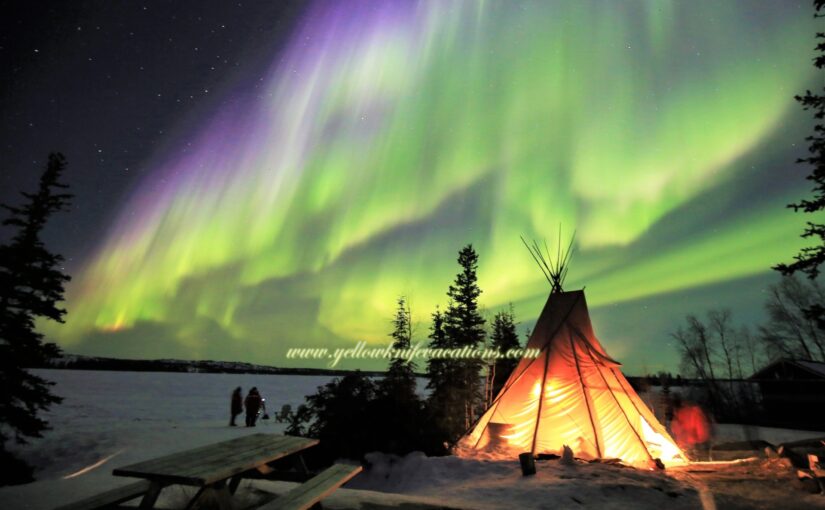
Watching green, pink and violet ribbons ripple across a silent winter sky is one of the most unforgettable travel experiences on Earth, and Canada is one of the best places in the world to see it. But the northern lights are never guaranteed, so when and where you go matters. This guide covers the best times to see the aurora borealis across Canada, the top regions to visit, and how to plan a stress-free trip with the right aurora borealis vacation packages.
What Causes the Aurora Borealis?
The aurora borealis, or northern lights, happens when charged particles from the sun collide with gases in Earth’s upper atmosphere. The result is a glowing display, most often green, though red, pink and purple can appear during stronger activity. Canada sits beneath the auroral oval, the ring-shaped zone around the magnetic pole where activity is most frequent, which is why its northern regions are so reliable for sightings.
The Short Answer: When Is the Best Time to See the Northern Lights in Canada?
The aurora is active year-round, but you can only see it when the sky is dark. That makes the viewing season roughly late August to mid-April. The strongest windows are:
- Late August to September: Dark skies return, temperatures are mild, and lakes are still unfrozen, which can create stunning reflections.
- Mid-November to early April: Long, dark nights and generally clear, dry winter skies make this the classic peak season in the far north.
- September and March equinox periods: Studies of geomagnetic activity show a tendency toward more frequent storms around the equinoxes, so these months often deliver vivid displays.
For the best odds, plan to be in position for at least three to four nights, since cloud cover and solar activity change from night to night.
Best Time of Night to See the Aurora
The prime viewing window is generally 10 p.m. to 3 a.m., with activity often peaking around local midnight. Check for a new moon or a thin crescent, because a bright full moon can wash out fainter displays. Give your eyes 15 to 20 minutes to adjust to the dark, and keep phone screens dimmed or in red-light mode.
Best Places to See the Aurora Borealis in Canada
Yellowknife, Northwest Territories
Yellowknife is widely considered the top aurora destination in Canada. It sits directly under the auroral oval and enjoys a dry, stable climate with a high share of clear nights. Best time: late August to mid-September, and mid-November through early April. Many travellers choose a guided experience so they have heated viewing spots, local expertise and transport handled for them. You can explore options through Yellowknife aurora tours and packages.
Whitehorse, Yukon
Whitehorse offers excellent viewing with the added bonus of mountain scenery, hot springs and winter activities such as dog sledding. Best time: September and then December through March.
Churchill, Manitoba
Best known for polar bears, Churchill also sits in a prime aurora zone. Best time: February and March for the aurora, with long, cold nights and strong activity.
Northern Saskatchewan, Alberta and Jasper Dark Sky Preserve
For travellers who prefer an easier-to-reach destination, Jasper National Park’s dark sky preserve and northern Alberta offer solid chances during strong solar activity. Best time: September through March.
Northern Ontario and Quebec
Algonquin and regions near Lake Superior, as well as northern Quebec, can deliver displays on active nights. They tend to be less consistent than the far north, so treat them as a bonus rather than a guarantee.
Month-by-Month Aurora Viewing Guide for Canada
- Late August: Dark skies return and the weather is still mild. Good.
- September: Strong activity and comfortable temperatures. Excellent.
- October: Cooler, with frequent clear nights. Very good.
- November: Long nights as the cold sets in. Very good.
- December: The longest nights of the year, and very cold. Excellent.
- January: Crisp, clear skies and deep cold. Excellent.
- February: Cold nights with strong activity. Excellent.
- March: An equinox boost and milder weather. Excellent.
- April: Nights shorten and the season winds down. Fair.
- May to July: Midnight sun or twilight skies make viewing very difficult. Poor.
Is 2026 a Good Year to See the Northern Lights?
Aurora activity follows the sun’s roughly 11-year cycle. Solar Cycle 25 reached its peak period in 2024 to 2025, and activity remains elevated in the years following the peak. That means the 2026 to 2027 season is still a very strong time to go, with a good chance of vivid displays. It is a great time to explore aurora borealis vacation packages and lock in your dates.
Why Book Aurora Borealis Vacation Packages?
Planning a northern lights trip on your own means juggling flights, accommodation, winter gear, transport and viewing locations. Well-designed aurora borealis vacation packages simplify all of that. Benefits include:
- Local expertise: Guides know where skies are darkest and how to read the forecast.
- Comfortable viewing: Heated cabins, tipis or lodges let you stay warm between displays.
- Multiple nights: Packages usually include several viewing nights to improve your odds.
- Photography help: Guides can help you set up your camera for sharp aurora shots.
- Added experiences: Dog sledding, ice fishing, snowshoeing and cultural activities fill your days.
Ready to plan? Browse the latest aurora borealis vacation packages to compare itineraries and find the best dates for your trip.
Tips for Your Aurora Trip
- Book early. Peak months, especially February and March, fill up fast.
- Stay at least three nights to give yourself multiple chances.
- Dress in layers. Pack insulated boots, thermal base layers, a parka, mittens and a warm hat.
- Check the forecast. Monitor the Kp index and cloud cover daily.
- Bring a tripod. A sturdy tripod and a camera with manual settings capture the best images.
- Stay flexible. Keep your schedule open for late-night outings.
Final Thoughts
The best times to see the aurora borealis across Canada are late August through September and mid-November through early April, with February and March standing out for their combination of strong activity and clear skies. Pair the right timing with the right destination, and you give yourself the best chance of witnessing one of nature’s greatest shows. Contact us and our team will help you plan.
Start planning your adventure today with expertly guided aurora borealis vacation packages and let the northern lights light up your trip.
