

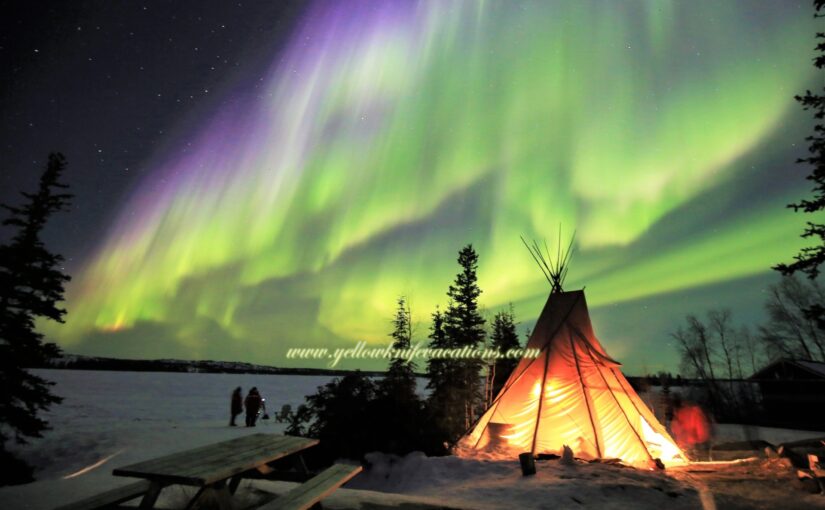
Few travel experiences compare to watching green, pink, and violet light ripple across a dark sky. After a spectacular run of activity in 2024 and 2025, many travellers are asking what the northern lights will look like in 2026 and where to go for the best chance of seeing them. If you want a dependable destination, a northern lights tour Yellowknife offers is hard to beat. Located in Canada’s Northwest Territories, Yellowknife sits directly beneath the auroral oval, where aurora activity is some of the most frequent and intense in the world.
This guide explains what to expect from the aurora in 2026, when to go, how a Yellowknife aurora tour works, and how to prepare, so you can plan with confidence.
Northern Lights 2026 Predictions: What to Expect
The Sun follows an activity cycle of about 11 years. NASA and NOAA announced in October 2024 that the Sun had reached the solar maximum period of Solar Cycle 25, and the UK Met Office has since reported that the peak almost certainly took place across 2024 and 2025. That makes 2026 a post-peak year, but not the end of the show. Here is what forecasters expect:
- Fewer storms overall, but strong ones are still possible: Some of the Sun’s biggest eruptions have historically happened years after the peak. A strong flare in November 2025 triggered a severe geomagnetic storm.
- More recurring, moderate displays: As the cycle declines, aurora activity is driven more by fast solar wind streams from coronal holes, which tend to produce repeating, moderate storms.
- Fewer sightings far from the Arctic: Very southerly aurora sightings may become less common, while locations inside the auroral oval keep seeing regular displays.
- A good outlook for the next few winters: The declining phase is expected to last several years, with the next solar minimum around 2030. The 2026-27 and 2027-28 seasons should still offer excellent viewing.
Space weather is difficult to forecast, and nobody can predict a specific night far in advance. Treat all predictions as odds, not promises. This is also why choosing the right location matters more than ever.
Why Yellowknife Is a World-Class Aurora Destination
When the Sun is past its peak, you want to be where the aurora appears most often. Yellowknife has a few natural advantages that make it ideal for aurora viewing:
- Prime location: The city lies under the auroral oval, so displays can appear even when solar activity is modest.
- Clear, dry skies: The region’s relatively dry climate means more cloud-free nights than many other northern destinations.
- Flat, open terrain: Wide horizons and lakes give you unobstructed views in every direction.
- Low light pollution: A short drive from the city puts you in true darkness, which makes the aurora brighter and more vivid.
Together, these factors give visitors a strong chance of seeing the lights over a multi-night stay, even in a declining solar phase.
When Is the Best Time to See the Northern Lights in 2026?
The aurora season in Yellowknife generally runs from mid-August to mid-April, and each part of the season offers something different:
- Late summer and early autumn (August to September): Milder temperatures, dark skies returning, and the chance to see the aurora reflected in open lakes.
- Deep winter (December to February): Long nights and snowy landscapes, but very cold temperatures.
- Late winter (March to early April): Often clear, crisp skies and slightly more comfortable weather, plus longer days for daytime activities.
A few more timing tips: March, April, September, and October are often considered especially good, displays often peak between about 10 p.m. and 2 a.m., and a new moon or thin crescent gives darker skies. Aurora activity is unpredictable, so the most reliable strategy is to stay several nights. Most travellers plan three to four nights to improve their odds of seeing a strong display.
What Happens on a Northern Lights Tour in Yellowknife?
A typical northern lights tour Yellowknife operators provide is designed around comfort, safety, and getting you to the best viewing spots at the right time.
1. Evening Pick-Up and Transfer
Tours usually begin in the evening, with transportation from your hotel to a dedicated viewing location outside the city, away from streetlights.
2. Warm Viewing Shelters
Many tours include heated cabins, tipis, or lodges where you can warm up between viewings. Hot drinks and light refreshments are often available.
3. Expert Guides
Experienced guides track weather and aurora conditions, help you find the best vantage points, and share local knowledge about the science and culture behind the lights.
4. Photography Support
Capturing the aurora takes the right settings. Many guides offer tips on camera setup, long exposures, and composing shots with foreground scenery.
5. Late-Night Viewing
The aurora often peaks late in the evening or after midnight, so most tours run for several hours. Be ready for a late night.
Complete Viewing Guide: How to See the Aurora
Whether you join a tour or go independently, these steps improve your chances:
- Choose a destination under the auroral oval: Location matters more than ever in a declining solar phase.
- Book several nights: Extra nights allow for weather and activity changes.
- Check the forecast: The Kp index shows the strength of geomagnetic activity, but clear skies matter just as much.
- Get away from lights: Even a short drive out of town makes the aurora look brighter.
- Find an open northern horizon: A frozen lake or hilltop works well.
- Let your eyes adjust: Give them 15 to 20 minutes in the dark and avoid looking at your phone screen.
- Be patient: Displays can build slowly, fade, and return several times during the night.
Tips to Prepare for Your Aurora Adventure
Dress in layers. Winter temperatures can drop well below freezing, and you’ll be standing still for long periods. Pack:
- A thermal base layer
- An insulated mid-layer such as fleece or wool
- A windproof, waterproof outer layer
- Insulated, waterproof boots
- Warm gloves, a hat, and a face covering
- Hand and toe warmers
Protect your gear. Cold drains batteries quickly. Bring spares and keep them in an inner pocket.
Be patient and flexible. The aurora is a natural phenomenon, and no one can guarantee a show. Allow extra nights, stay relaxed, and enjoy the experience, including the stars, the silence, and the landscape.
Check conditions. Your guide will monitor cloud cover and aurora forecasts, so follow their advice on timing and location.
Northern Lights Photography Tips
Capturing the aurora is easier when you know the basics:
- Use a tripod: A sturdy tripod and a camera with manual settings work best, ideally with a wide-angle lens.
- Start with these settings: Try an aperture of f/2.8 or wider, ISO 1600 to 3200, and an exposure of 5 to 15 seconds, then adjust.
- Focus manually: Focus on a bright star or distant light, and turn off flash and image stabilisation when using a tripod.
- Use night mode on your phone: Keep the phone steady or use a mini tripod.
- Add foreground interest: Include trees, cabins, or frozen water in the frame for depth.
Things to Do in Yellowknife During the Day
Your trip doesn’t have to be only about the night sky. Daytime activities can make the journey even more memorable:
- Exploring Old Town and the waterfront on Great Slave Lake
- Visiting the Northwest Territories Legislative Assembly and local museums
- Learning about Indigenous culture and traditions of the region
- Trying winter activities such as snowshoeing, dog sledding, or ice fishing (in season)
These activities help you rest between late nights and discover more of the North.
Choosing the Right Northern Lights Tour Package
When comparing options, consider:
- Length of stay: More nights mean better chances of a great display.
- Accommodation: Choose a location that’s comfortable and convenient for late-night transfers.
- Tour style: Compare small-group, private, and multi-activity experiences.
- Inclusions: Check what’s covered, such as transfers, warm clothing, meals, and photography help.
- Travel dates: Match your trip to your preferred weather and the part of the season that appeals to you.
Final Thoughts
The northern lights are far from finished. Although the Sun is past its peak, 2026 and the winters that follow still offer outstanding opportunities for travellers who choose the right location, stay several nights, and go with knowledgeable local guides. A northern lights tour Yellowknife offers is more than a sightseeing outing. It’s a chance to stand under one of nature’s most breathtaking displays in one of the best places on Earth to see it.
Start exploring Northern lights Canada packages to compare destinations, travel dates, accommodation options, and guided experiences that suit your plans. Choose an itinerary that gives you time to enjoy the destination, prepare for changing weather, and maximise your opportunities to see the sky come alive. Contact our team today to explore available tour packages and start planning your unforgettable Northern Lights adventure in Canada!
